The Training Area
By following the links you find in this page you can go through a first general section that will provide some basic information about cinematography, theory of perception of moving images, colours and sound.
Then, you can proceed into the process of film preservation and restoration, as divided in its several aspects and activities, ranging from acquisition, identification and conservation of the original materials, down to the different technical phases of film restoration, in the form of laboratory and research work.
The Cinema, What Is It?
As a first, preliminary step into the Training provided by FAOL, we designed this Section with a twofold aim. On the one hand to give the novice basic information on some of the founding concepts of film technology; and on the other, to make sure that everybody, including those who are already knowledgeable in the field share a common understanding of those basic concepts.
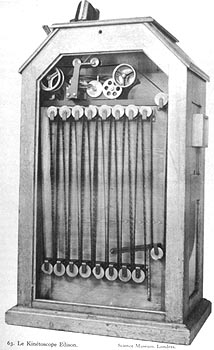 The different subsections
of this area are designed to guide you through from the basic principles of
cinematography (as definitions of light, sound and audiovisual perception) to
its early developments (silent and sound cinema) up to few notions on editing
and colour cinematography.
The different subsections
of this area are designed to guide you through from the basic principles of
cinematography (as definitions of light, sound and audiovisual perception) to
its early developments (silent and sound cinema) up to few notions on editing
and colour cinematography.
We strongly recommend you read this section. You might find it confirmed that you are already knowledgeable in the field, or you might find interesting, new information.
Take me to…
 1.
Light, Sound & Audiovisual Perception
1.
Light, Sound & Audiovisual Perception
2.
Prior To The Dawn Of Motion Pictures
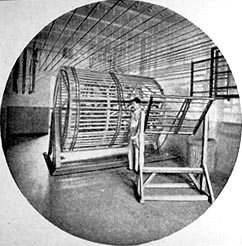 The Process of Film Preservation and Restoration
Film preservation and restoration consists of many activities, ranging from historical notions on film technology to knowledge of film history, from modern technology as applied to film preservation process, to notions on history of film technology. Film preservation and restoration is a complicated task, and all expertise and knowledge does and must contribute to the final result.
Also, being able to judge and evaluate the final results of a preservation or a restoration is something which is of major importance for film archivists (who need to judge the result of their work), for film scholars and film students (who must be able to understand what sort of relationship exists between the film as it appears after restoration and the film in its original version), but also for filmgoers (who more and more often are confronted with films that are advertised as "restored versions").
In the following sections, we will provide information on the several aspects and topics that are involved in film preservation and restoration process. All the areas and the sections can be studied and read in different "depths" of knowledge, ranging from a very basic level - useful for the ones who are just interested in knowing what is going on in that specific phase of the work - to a highly specialised level designed for those who really want to follow highly skilled preservation and restoration procedures, either on the technical or on the methodological side of the process.
So, by following the link and entering into this section, you will ideally open a door to a long corridor, where you will find many rooms, each one opening to a new phase or a different step of this complicate and differentiated task: to save cinematographic records.