Varying the development time.
This is relatively straightforward in the case of black and white materials. The temperature of development, the constituents of the developer, and the agitation all also play a part in contrast adjustment, but time is easier and more predictable.
In the laboratory the most widely used prediction of black and white contrast is the Time-Gamma curve. This is produced by exposing a number of control strips of the relevant duplicating film and processing at various development times [usually this achieved in a motion picture film processor by varying the output speed. fix and wash times also alter but do not have much effect if any on the sensitometry.
The curves of all the strips are plotted and the contrasts measured, usually Gamma, the slope of the straight-line portion of the curve. A graph plotted of the contrast against the gamma is the time gamma curve for that stock in that processor and any contrast within these limits can be achieved by interpolation.
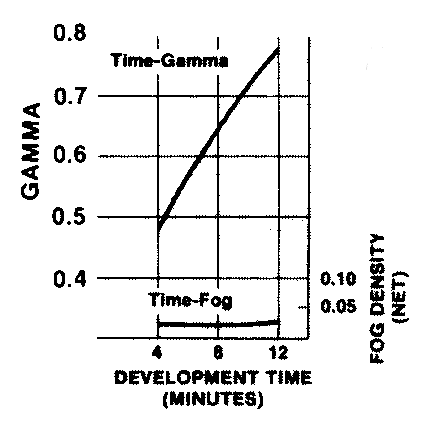
A Time-gamma curve
In the case of colour materials changing the manufacturer's aim contrast is generally only possible within narrow limits. Changes in development time alter the contrast of the three layers to differing extents and this can result in "cross contrasts", where the differences show as varying lack of neutrality in highlights and shadows of the final positive. A good example of this is where attempts to reduce the contrast of colour negative films usually results in prints with especially low green layer contrast - this is seen as magenta shadows and green highlights. This is not correctable by grading as reducing the magenta in the shadows increases the green [the complimentary of magenta] in the highlights.